
Login
Support Sailonline
If you haven't already - join the SAILONLINE YACHT CLUB!
Please also consider making a donation - all amounts are greatly appreciated!
|
Posted by bonknhoot  |
|
|
Just read Roland Stoerte's report on the B2B2 of last night. As he wrote it was all about 'rounding' and a minor tactical decision for the close-hauled bit to the finish: pinch or put in a tack. Roland writes about 'counting' to know when to press 'send command'. How does that work, anybody?
During my short SOL career I have developed a quite different approach to the dilemma of 'timing'. I found a few VBA UDF's on the net which return course and distance between two lats and lons. So I enter the relevant lats and lons into a spreadsheet before a race (or as I go along) and then copy and paste time of day, speed and position over from BrainAid (ever more frequently) as I close on a buoy or a cape or a shore. If BrainAid's data is fully synced, then my spreadsheet returns me my exact ETA to the next manoeuvre, except of course that speed may change as I progress and that I may be on a TWA curve and not a COG straight line. Editing the pre-set DC then completes the process and with 30 secs to go I just sit back and wait. It continues to surprise how much the calc'd ETA varies from one sample to the next. Even with just two or thee minutes to the mark and no noticeable speed variation (e.g as a result of performance recovery perhaps) the swings are often order of mag 5 to 10 secs. An element of luck and a trade-off risk v reward thus remains. So... does BrainAid provide a wholly accurate sync'd sample of a SOL yacht's data, or... ? Thoughts anybody? Clipping along |
|
|
Posted by kroppyer  |
|
|
SOL's normal client updates your own boat position every 15 seconds, and requests its data directly from sailonline.
brainaid's navigation page updates boat data roughly every 10 seconds, and requests its data from brainaid.de (which probably gets its data, without caching, from sailonline). Sailonline recalculates the position of your boat with a variable interval. My experience is that this interval is usually 10 seconds. This means that, using sol's client, you will see your boat move every 15 seconds (maybe in a rare case, 30 seconds). If you see you have only one jump left to the mark, you can count to 10, and then turn, assuming the server already jumped, but before the client updates. This can go wrong. Sometimes I get the feeling that commands are executed in-between two jumps (boat turns less than a single jump-length from my last position). Sometimes, even after 10 seconds, my boat turns at its last position, 5 seconds later the client updates and shows a track that suggests my boat turned 10 seconds earlier than I sent the command. If you set a good DC, with some margin (and do not adjust it using the DC countdown, unless you are sure your local clock is in sync with sailonline), your boat often does a good rounding. For now, I think the best method is: set a reasonably safe DC (like 10 seconds after the mark), then try to beat that manually, using your preferred method (counting, instinct, visual, confidence, praying, persuasion of sol server, telekinesis). Turning you boat at an exact place is hard, and I think part of a good rounding is not only getting your boat to turn where you want it to turn, but also accepting that you can't do that, and solving it differently: leave some room to the mark (or land), turn about one jump before you're at the mark so that you touch the mark (this needs practise). You will sail past the mark with a better angle: the distance you travel after the mark is not as much in the wrong direction as usual. When you can, of course, complete the turn. 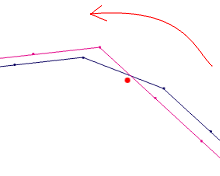
This is how accurate DC roundings can be: 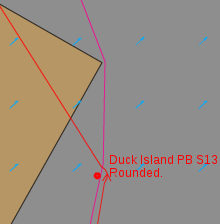 --- Last Edited by kroppyer at 2014-05-04 20:11:18 --- |
|
|
Posted by JB  |
|
|
Viva Jan and Kroopy.
Not long ago in this forum I’ve put some words about my frustration precisely about this issue. So, I’m totally in tune with both. My conclusions were/are simple. Instead of a precise boat maneuver, trying to turn where you need and want, it’s an act of pure luck and/or faith. For the same “sail engine” input conditions (TWD/TWA/TWS) the same boat has, sometimes, makes different consecutive jump lengths and, even in the same run, different ones. So, I discovered also that my boat has free will, challenging logic, laws of kinematics, accuracy and, in last ratio, the patient of the sailor. In long races, unless you are close to a competitor, it doesn’t make a big difference or, any at all. In TR’s, where go “cutting the corners”, it can result in loss of several places. Yes, we have to accept that “luck” is part of the sport, but it shouldn’t be here applicable. There are two (cumulative, or not) solutions for this problem: 1 - Effective DC’s - function of remaining distance and B.S., the boat changes direction in the precise calculated time, as it should be; 2 - Waypoints - the boat changes direction on previously defined marks, independently of all the prevailing conditions. The same lack of accuracy can be pointed to the famous “jumps over land”. I was in shock when it happened to me. Again, it shouldn’t. Big Hug from João Sail Fair. |
|
|
Posted by Rod  |
|
|
The above entries describe very closely my own experience and complaints about the precise point and time at which course changes are executed. I also have not,(so far?) been able to determine any "formula" which describes the process.
My question here, as a "non-user-of-routers", and observing the superior performance of those who do use them, is whether these routers have SOLVED this problem. Am I merely penalizing myself and my SOLing performance by refraining from their use, just to keep tuned the "old grey cells"? If it breaks, it's not strong enough--if it doesn't, it's too heavy. |
|
|
Posted by kroppyer |
|
|
Rod,
Most* routers are useless in these short races. To speed up the routing process they use "jumps" of much more than 10 or 15 seconds. So they certainly do not help you rounding marks (or at least, not when you can't lose a few minutes). *) I say "most" because I can't pretend to know "all" routers. Maybe there is a router, specifically made for online sailing, that is able to use very small jumps. |
|
|
Posted by Rod |
|
|
I will continue to exercise the "old grey cells"---in the vague hope that they will become "young" grey cells----if I could just remember 'how' to do it...... --- Last Edited by Rod at 2014-06-27 16:28:18 --- If it breaks, it's not strong enough--if it doesn't, it's too heavy. |
Please login to post a reply.
Races
Next Race: 00d 00h 00m
Current Races:
Mad Max by Balloon 2026 - Across the Outback

Mad Max Rockatansky doesn’t get to go in a balloon in any of the Legends of the Wasteland, and the Wasteland is not necessarily the Outback of Australia, but Mel Gibson and film director George Miller indubitably are… of Australia, and ballooning as reconnaissance is a main feature of the Mad Max spin-off video game, so here goes: 1500nm in a balloon from somewhere on the edge of the Outback, Goondiwindi, to cross a finish line at Fitzroy Crossing, somewhere on the edge of the Outback!
Race #1974
INFOby brainaid.de
SOL Balloon PARTICULARS
WX Updates:
0430 / 1030 / 1630 / 2230
Ranking: BOL - SYC
Race starts: Oct 14th 13:00 Registration will open soon
GO TO RACE
Valdes Peninsula TIMED Race 2026
This is a TIMEDrace so you may RE-REGISTER HEREto try again after finishing a run. You will have two weeks to test your skill and decision making after the race opens.
Race #2066
INFOby brainaid.de
PARTICULARS
WX Updates:
0430 / 1030 / 1630 / 2230
Ranking:
TRQ4 - TRCH - SYC
RACE CLOSE: Saturday,
24 October at 23:00 UTC
Race starts: Oct 11th 12:00 Registration will open soon
GO TO RACE
Roma Giraglia Regata 2026

Our eighth race of nine to celebrate all things Mediterranean - fickle winds, history and olive oil – is another buddy-up; this one with the Circolo Nautico Riva di Traiano . Founded in 1984, as the new Traiano yacht Harbour neared completion, the Circola since then has developed into one of the major yachting competition centres in Italy, and next to the 450nm Roma per Tutti (which SOL buddied earlier in the year), the Roma Giraglia Regata is its other headline offshore event. First raced in 2005, the 210nm course takes competitors from Traiano to a rock on the inside of the Ile de la Giraglia off the northern tip of Corsica and back to the Italian mainland for a finish in the bay of Santo Stefano. We’re racing this one in our Class 40!
Race #2058
INFO by brainaid.de
Class 40 PARTICULARS
WX Updates:
0430 / 1030 / 1630 / 2230
Ranking: MED - SUPBUD - SYC
Race starts: Oct 08th 16:00
Registration Open!
Arctic Tern - Greenland to Antarctica 2025

INFO by brainaid.de
Maxi Trimaran PARTICULARS
WX Updates:
0430 / 1030 / 1630 / 2230 Ranking:
OCQ4 - OCCH - SYC - MIG
Race starts: Oct 05th 11:00 Registration Open!
GO TO RACE
Cross the Convergence 2026 - Masirah to Chagos
Having crossed, re-crossed and re-re-crossed the Convergence Zones of the Pacific and the Atlantic, we now face our second crossing of the Convergence Zone of the World’s third great equator-spanning sea, the Indian Ocean, taking us from the channel between Masirah Island and the Oman mainland to the Chagos Archipelago. It’s 1900nm and we’ll be sailing our very fine Archer 78, and won’t mention that both locations (of departure and arrival) are heavily militarized and the why’s and what next’s concerning that – mindful as always of SOL Netiquette.
Race #1988
INFOby brainaid.de
Archer 78PARTICULARS
WX Updates:
0430 / 1030 / 1630 / 2230
Ranking: CCZ - SYC
Race starts: Oct 02nd 18:00 Registration Closed
GO TO RACE
SYC Ranking

Series
- SYC ranking
- 2026 TSI
- 2026 TRQ4
- 2026 TRQ3
- 2026 TRQ2
- 2026 TRQ1
- 2026 TRCH
- 2026 TQD
- 2026 SUPerBUDdy
- 2026 SSANZ
- 2026 SPQ4
- 2026 SPQ3
- 2026 SPQ2
- 2026 SPQ1
- 2026 SPCH
- 2026 SHE
- 2026 ROW
- 2026 RNW
- 2026 RNI
- 2026 RMI
- 2026 RED
- 2026 OCQ4
- 2026 OCQ3
- 2026 OCQ2
- 2026 OCQ1
- 2026 OCCH
- 2026 NIA
- 2026 MIG
- 2026 MED
- 2026 LOOR
- 2026 CCZ
- 2026 BOL
- 2026 B2B
- 2025 TS
- 2025 TRQ4
- 2025 TRQ3
- 2025 TRQ2
- 2025 TRQ1
- 2025 TRCH
- 2025 TD
- 2025 SuperSOLer
- 2025 SSANZ
- 2025 SPRCH
- 2025 SPQ4
- 2025 SPQ3
- 2025 SPQ2
- 2025 SPQ1
- 2025 SHE
- 2025 SBB
- 2025 RWW
- 2025 RMI
- 2025 RED
- 2025 OCQ4
- 2025 OCQ3
- 2025 OCQ2
- 2025 OCQ1
- 2025 OCCH
- 2025 NT
- 2025 LOOR
- 2025 DN
- 2025 B2B
- 2025 ARQ4
- 2025 ARQ3
- 2025 ARQ2
- 2025 ARQ1
- 2025 ARCH
- 2025 ABS
- 2024 TS
- 2024 TRQ4
- 2024 TRQ3
- 2024 TRQ2
- 2024 TRQ1
- 2024 TRCH
- 2024 TD
- 2024 SVF
- 2024 SUPerSOLer
- 2024 SSANZ
- 2024 SPRQ4
- 2024 SPRQ3
- 2024 SPRQ2
- 2024 SPRQ1
- 2024 SPRCH
- 2024 SHE
- 2024 RTW
- 2024 RMS
- 2024 OCQ4
- 2024 OCQ3
- 2024 OCQ2
- 2024 OCQ1
- 2024 OCCH
- 2024 LOOR
- 2024 HILAT
- 2024 GWT
- 2024 DN
- 2024 CRW
- 2024 B2B
- 2024 ARQ4
- 2024 ARQ3
- 2024 ARQ2
- 2024 ARQ1
- 2024 ARCH
- 2023 TS
- 2023 TRQ4
- 2023 TRQ3
- 2023 TRQ2
- 2023 TRQ1
- 2023 TRCH
- 2023 TD
- 2023 SVS
- 2023 SUPerSOLer
- 2023 SSANZ
- 2023 SPRQ4
- 2023 SPRQ3
- 2023 SPRQ2
- 2023 SPRQ1
- 2023 SPRCH
- 2023 SHE
- 2023 RTW
- 2023 RNI
- 2023 RMS
- 2023 PIC
- 2023 OCQ4
- 2023 OCQ3
- 2023 OCQ2
- 2023 OCQ1
- 2023 OCCH
- 2023 LOOR
- 2023 DN
- 2023 ARQ4
- 2023 ARQ3
- 2023 ARQ2
- 2023 ARQ1
- 2023 ARCH
- 2022 TRQ4
- 2022 TRQ3
- 2022 TRQ2
- 2022 TRQ1
- 2022 TRCH
- 2022 TD
- 2022 Tall Ships
- 2022 SUPerSOLer
- 2022 SSANZ
- 2022 SSA
- 2022 SPRQ4
- 2022 SPRQ3
- 2022 SPRQ2
- 2022 SPRQ1
- 2022 SPRCH
- 2022 SHE
- 2022 OCQ4
- 2022 OCQ3
- 2022 OCQ2
- 2022 OCQ1
- 2022 OCCH
- 2022 NTR
- 2022 LOOR
- 2022 CTR
- 2022 ARQ4
- 2022 ARQ3
- 2022 ARQ2
- 2022 ARQ1
- 2022 ARCH
- 2021 TRQ4
- 2021 TRQ3
- 2021 TRQ2
- 2021 TRQ1
- 2021 TRCH
- 2021 TD
- 2021 Tall Ships
- 2021 SYCQ4
- 2021 SYCQ3
- 2021 SYCQ2
- 2021 SYCQ1
- 2021 SYCCH
- 2021 SUPerSOLer
- 2021 SSANZ
- 2021 SPRQ4
- 2021 SPRQ3
- 2021 SPRQ2
- 2021 SPRQ1
- 2021 SPRCH
- 2021 Shetland
- 2021 PAC6
- 2021 OCQ4
- 2021 OCQ3
- 2021 OCQ2
- 2021 OCQ1
- 2021 OCCH
- 2021 ESRW
- 2020 TSE
- 2020 TSA
- 2020 TRQ4
- 2020 TRQ4
- 2020 TRQ3
- 2020 TRQ2
- 2020 TRQ1
- 2020 TRCH
- 2020 Tasman Double
- 2020 SYCQ4
- 2020 SYCQ3
- 2020 SYCQ2
- 2020 SYCQ1
- 2020 SYCCH
- 2020 SUPerSOLer
- 2020 SSANZ
- 2020 SRQ4
- 2020 SRQ3
- 2020 SRQ2
- 2020 SRQ1
- 2020 SPRCH
- 2020 Shetland
- 2020 RTW
- 2020 RNI
- 2020 Odyssey
- 2020 OCQ4
- 2020 OCQ3
- 2020 OCQ2
- 2020 OCQ1
- 2020 OCCH
- 2020 A3
- 2019 TRQ4
- 2019 TRQ3
- 2019 TRQ2
- 2019 TRQ1
- 2019 TRCH
- 2019 Tasman Double
- 2019 Tall Ships
- 2019 SYCQ4
- 2019 SYCQ3
- 2019 SYCQ2
- 2019 SYCQ1
- 2019 SYCCH
- 2019 SUPerSOLer
- 2019 SSANZ
- 2019 SRQ4
- 2019 SRQ3
- 2019 SRQ2
- 2019 SRQ1
- 2019 SPRCH
- 2019 Shetland
- 2019 Round New Zealand
- 2019 OCQ4
- 2019 OCQ3
- 2019 OCQ2
- 2019 OCQ1
- 2019 OCCH
- 2018 TRQ4
- 2018 TRQ3
- 2018 TRQ2
- 2018 TRQ1
- 2018 TRCH
- 2018 Tasman Double
- 2018 Tall Ships
- 2018 SUPSOL
- 2018 SSANZ Triple
- 2018 SRQ4
- 2018 SRQ3
- 2018 SRQ2
- 2018 SRQ1
- 2018 SPRCH
- 2018 Shetland
- 2018 Shackleton Challenge
- 2018 OCQ4
- 2018 OCQ3
- 2018 OCQ2
- 2018 OCQ1
- 2018 OCCH
- 2018 40CH
- 2017 TS RDV
- 2017 TRQ4
- 2017 TRQ3
- 2017 TRQ2
- 2017 TRQ1
- 2017 TRCH
- 2017 Tasman Double
- 2017 Tall Ships
- 2017 SWR
- 2017 SUPSOL
- 2017 SSANZ Triple
- 2017 SSANZ RNI
- 2017 SPRR3
- 2017 SPRR2
- 2017 SPRR1
- 2017 SPRCH
- 2017 Red Dot
- 2017 OCQ4
- 2017 OCQ3
- 2017 OCQ2
- 2017 OCQ1
- 2017 OCCH
- 2017 40CQ3&4
- 2017 40CQ1&2
- 2016 TRQ4
- 2016 TRQ3
- 2016 TRQ2
- 2016 TRQ1
- 2016 TRCH
- 2016 Tasman Double
- 2016 Tall Ships
- 2016 SUPSOL
- 2016 SSANZ Triple
- 2016 SRQ4
- 2016 SRQ3
- 2016 SRQ2
- 2016 SRQ1
- 2016 SPRCH
- 2016 RTWR
- 2016 OCQ4
- 2016 OCQ3
- 2016 OCQ2
- 2016 OCQ1
- 2016 OCCH
- 2016 Corporate Open Gold
- 2016 A3
- 2015 TRQ4
- 2015 TRQ3
- 2015 TRQ2
- 2015 TRQ1
- 2015 TRCH
- 2015 Tasman Double
- 2015 Tall Ships
- 2015 SYQ4
- 2015 SYQ3
- 2015 SYQ2
- 2015 SYQ1
- 2015 SYCCH
- 2015 SUPSOL
- 2015 SSANZ Triple
- 2015 SRQ4
- 2015 SRQ3
- 2015 SRQ2
- 2015 SRQ1
- 2015 SPRCH
- 2015 OCQ4
- 2015 OCQ3
- 2015 OCQ2
- 2015 OCQ1
- 2015 OCCH
- 2015 Aegean Rally
- 2014 Timed Races Championship
- 2014 Tasman Double
- 2014 Tall Ships
- 2014 SYC Championship
- 2014 SSANZ Trio
- 2014 SSANZ RNI
- 2014 Sprints Championship
- 2014 Scandinavian Tour
- 2014 Round The World Race
- 2014 Ocean Championship
- 2014-2015 Sailonline World Race
- 2013 Tall Ships
- 2013 SYC Championship
- 2013 SSANZ B&G Simrad
- 2013 Capt Anderson
- 2012 W Australia Regatta
- 2012 Tall Ships
- 2012 SSANZ B&G Simrad
- 2012 RNZ Two Handed
- 2012 Global Challenge
- 2012 Ecker Cup
- 2012 Black Sea
- 2012 A3
- 2011 Vancouver Island
- 2011 Tasman Double
- 2011 SSANZ B&G Simrad
- 2011 SOL Global Challenge
- 2011 SJORA Series
- 2011 Scandinavian Tour
- 2011 Round North Island
- 2011 Asian Sprints
- 2011-2012 SOL World Race
- 2010 Tasman Double
- 2010 Ouzo Rally
- 2010 Iberian Tour
- 2010 Auckland Regional
- 2009 French SOLo
- 2009 Bosphore - Bretagne
- 2008 SYCC
- 2008 -2013 SYC Week Race Championship
- 2008 -2013 SYC Week-End Race Championship
- 2008 -2013 SYC Ocean Race Championship
- 2008-2009 Sailonline Ocean Race
- 2004 LOOR
Mobile Client
SYC members have the benefit of access to our mobile/lightweight web client!